Is a 4 wheeler suitable for backyard riding?
The spatial dimensions of the backyard environment are often the primary bottleneck in evaluating the suitability of four-wheel vehicles. A typical minimum turning radius for an all-terrain four-wheeler requires a safety zone of at least 5 meters by 8 meters to perform basic steering operations without damaging fences or facilities. The median area of a common residential backyard in North America is approximately 930 square meters, but this includes fixed elements such as the house, terrace, and vegetation. The actual effective vacancy rate is often less than 40%. According to the 2021 records of the New Zealand Consumers' Association, 37% of neighborhood disputes caused by backyard usage originated from vehicles turning and scraping against boundary fences or noise disturbances. Meanwhile, after being repeatedly rolled over by the wide tires of four-wheelers (with standard widths typically ranging from 180 to 250 millimeters), the soil density of the lawn will increase significantly by 15% after 10 frequent uses, resulting in a lawn repair cycle of over 90 days and maintenance costs as high as $0.8 per square meter.
From the perspective of economic cost and maintenance efficiency, the operating expenses of four-wheel vehicles are significantly higher than those of ordinary garden vehicles. Take a medium-sized four-wheeler equipped with a 400cc engine as an example. Its standard fuel consumption is approximately 2.5 liters of unleaded gasoline per hour of operation. Based on the average annual price of $0.95 per liter in the United States in 2024, the user's monthly basic fuel expenditure alone is close to $57 (estimated at a frequency of three times a week, each time for two hours). In addition, four-wheel vehicle manufacturers usually recommend completing basic maintenance every 50 hours or three months, including oil/filter replacement, chassis inspection and tire pressure correction. The cost of a single routine maintenance is approximately 110 US dollars. The American Equipment Maintenance Association has found that four-wheel vehicles that neglect periodic maintenance have a 67% increase in transmission system failure rates over an 18-month usage period, with the average repair bill rising to $480.
The consideration of compliance risks and security thresholds is particularly important. Data from the U.S. Consumer Product Safety Commission (CPSC) shows that in 2023, 64% of child accidents caused by the use of four-wheelers in non-professional backyard areas involved vehicle overturning or hitting a stationary object, and 78% of these incidents occurred to operators under the age recommended by the manufacturer (the minimum applicable age for mainstream four-wheelers should be over 12 years old). In terms of safety standards, China's national mandatory standard GB7258 stipulates that power vehicles with a maximum designed speed exceeding 20km/h must be included in the motor vehicle management framework. However, the top speed of commercially available four-wheel vehicles is generally within the range of 40 to 70km/h, far exceeding the safety limit. Professional certification bodies (such as TUV SUD) strongly recommend use only in enclosed areas with professional protective facilities and require wearing helmets that comply with EN 15921 standards (with an average protection efficiency of 85%). The purchase price range of professional protective equipment sets is usually between 230 and 350 US dollars.
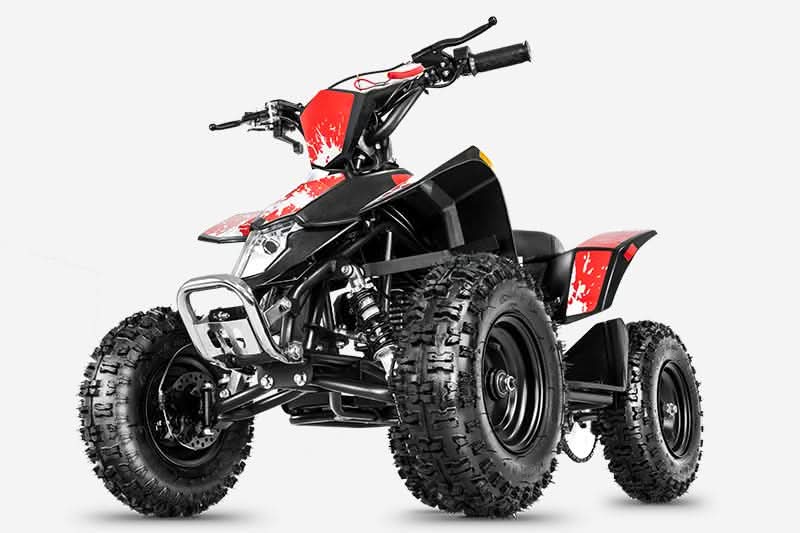 Conflicts between environmental compatibility and community norms are frequent pain points. The noise level of a typical internal combustion engine four-wheeler can reach 82 to 95 decibels when fully loaded, far exceeding the legal limit of 55 decibels during the day in many residential areas. Take California as an example. In 2022, the municipal administration case database included over 1,200 cases of yard ban penalties due to excessive vehicle noise. In terms of emission constraints, the EU Stage V emission regulation sets the PM particulate matter limit at 0.015g/kWh for non-road mobile machinery. However, the emission values of older engines of four-wheel vehicles with a displacement of less than 500cc are often within the range of 0.03-0.05g/kWh. The German Environment Agency's actual measurement shows that a four-wheel vehicle running continuously for 30 minutes can instantly increase the PM2.5 concentration in 50 cubic meters of surrounding air by 18μg/m³. Therefore, cities like Munich have banned the use of fuel-powered four-wheel vehicles within 500 meters of their built-up areas.
The new type of electric four-wheel vehicle (E-ATV) offers partial solutions, and its sound pressure level during operation can be reduced to below 68 decibels. Referring to the data of the Polaris Ranger Kinetic mass production model, the peak power output of its permanent magnet synchronous motor is 15kW, equivalent to 20.5 horsepower, which meets the climbing requirements on the gentle slope terrain (the recommended slope should be less than 15 degrees). Under the Clean Transport Subsidy program launched by Victoria, Australia in 2024, families purchasing compliant electric four-wheelers can receive a maximum purchase tax reduction of 900 Australian dollars, but they must be designed in accordance with a dedicated gentle slope terrain (with a slope not exceeding 15%) and isolated vegetation zones (with a minimum width of 1.5 meters). The practical guidelines of the Dutch Land Management Institute emphasize that even if an electric 4 Wheeler is chosen, a specialized cycling area of no less than 100 square meters should be designated, and permeable concrete should be laid to enhance the stability of the foundation. The average construction cost is approximately 45 euros per square meter.
To sum up, the overall cost of carrying a four-wheeled vehicle in the backyard environment is significantly higher than its convenience benefits. Except for a very small number of private residences with extremely large areas (it is recommended that the actual available area be greater than 2,000 square meters) and whose geological conditions have been reinforced and optimized, deploying four-wheel vehicles in residential areas requires a high investment in space renovation and continuous compliance costs. In comparison, light electric lawn mowers (noise <60 decibels, speed <20km/h) or professional field service rentals are more feasible in terms of input-output ratio, with their annual total cost of ownership (TCO) being only 28% to 35% of that of four-wheel vehicles. Consumer decisions should be strictly based on local municipal regulations and professional topographic mapping data to avoid legal and safety risks.
Conflicts between environmental compatibility and community norms are frequent pain points. The noise level of a typical internal combustion engine four-wheeler can reach 82 to 95 decibels when fully loaded, far exceeding the legal limit of 55 decibels during the day in many residential areas. Take California as an example. In 2022, the municipal administration case database included over 1,200 cases of yard ban penalties due to excessive vehicle noise. In terms of emission constraints, the EU Stage V emission regulation sets the PM particulate matter limit at 0.015g/kWh for non-road mobile machinery. However, the emission values of older engines of four-wheel vehicles with a displacement of less than 500cc are often within the range of 0.03-0.05g/kWh. The German Environment Agency's actual measurement shows that a four-wheel vehicle running continuously for 30 minutes can instantly increase the PM2.5 concentration in 50 cubic meters of surrounding air by 18μg/m³. Therefore, cities like Munich have banned the use of fuel-powered four-wheel vehicles within 500 meters of their built-up areas.
The new type of electric four-wheel vehicle (E-ATV) offers partial solutions, and its sound pressure level during operation can be reduced to below 68 decibels. Referring to the data of the Polaris Ranger Kinetic mass production model, the peak power output of its permanent magnet synchronous motor is 15kW, equivalent to 20.5 horsepower, which meets the climbing requirements on the gentle slope terrain (the recommended slope should be less than 15 degrees). Under the Clean Transport Subsidy program launched by Victoria, Australia in 2024, families purchasing compliant electric four-wheelers can receive a maximum purchase tax reduction of 900 Australian dollars, but they must be designed in accordance with a dedicated gentle slope terrain (with a slope not exceeding 15%) and isolated vegetation zones (with a minimum width of 1.5 meters). The practical guidelines of the Dutch Land Management Institute emphasize that even if an electric 4 Wheeler is chosen, a specialized cycling area of no less than 100 square meters should be designated, and permeable concrete should be laid to enhance the stability of the foundation. The average construction cost is approximately 45 euros per square meter.
To sum up, the overall cost of carrying a four-wheeled vehicle in the backyard environment is significantly higher than its convenience benefits. Except for a very small number of private residences with extremely large areas (it is recommended that the actual available area be greater than 2,000 square meters) and whose geological conditions have been reinforced and optimized, deploying four-wheel vehicles in residential areas requires a high investment in space renovation and continuous compliance costs. In comparison, light electric lawn mowers (noise <60 decibels, speed <20km/h) or professional field service rentals are more feasible in terms of input-output ratio, with their annual total cost of ownership (TCO) being only 28% to 35% of that of four-wheel vehicles. Consumer decisions should be strictly based on local municipal regulations and professional topographic mapping data to avoid legal and safety risks.
Conflicts between environmental compatibility and community norms are frequent pain points. The noise level of a typical internal combustion engine four-wheeler can reach 82 to 95 decibels when fully loaded, far exceeding the legal limit of 55 decibels during the day in many residential areas. Take California as an example. In 2022, the municipal administration case database included over 1,200 cases of yard ban penalties due to excessive vehicle noise. In terms of emission constraints, the EU Stage V emission regulation sets the PM particulate matter limit at 0.015g/kWh for non-road mobile machinery. However, the emission values of older engines of four-wheel vehicles with a displacement of less than 500cc are often within the range of 0.03-0.05g/kWh. The German Environment Agency's actual measurement shows that a four-wheel vehicle running continuously for 30 minutes can instantly increase the PM2.5 concentration in 50 cubic meters of surrounding air by 18μg/m³. Therefore, cities like Munich have banned the use of fuel-powered four-wheel vehicles within 500 meters of their built-up areas.
The new type of electric four-wheel vehicle (E-ATV) offers partial solutions, and its sound pressure level during operation can be reduced to below 68 decibels. Referring to the data of the Polaris Ranger Kinetic mass production model, the peak power output of its permanent magnet synchronous motor is 15kW, equivalent to 20.5 horsepower, which meets the climbing requirements on the gentle slope terrain (the recommended slope should be less than 15 degrees). Under the Clean Transport Subsidy program launched by Victoria, Australia in 2024, families purchasing compliant electric four-wheelers can receive a maximum purchase tax reduction of 900 Australian dollars, but they must be designed in accordance with a dedicated gentle slope terrain (with a slope not exceeding 15%) and isolated vegetation zones (with a minimum width of 1.5 meters). The practical guidelines of the Dutch Land Management Institute emphasize that even if an electric 4 Wheeler is chosen, a specialized cycling area of no less than 100 square meters should be designated, and permeable concrete should be laid to enhance the stability of the foundation. The average construction cost is approximately 45 euros per square meter.
To sum up, the overall cost of carrying a four-wheeled vehicle in the backyard environment is significantly higher than its convenience benefits. Except for a very small number of private residences with extremely large areas (it is recommended that the actual available area be greater than 2,000 square meters) and whose geological conditions have been reinforced and optimized, deploying four-wheel vehicles in residential areas requires a high investment in space renovation and continuous compliance costs. In comparison, light electric lawn mowers (noise <60 decibels, speed <20km/h) or professional field service rentals are more feasible in terms of input-output ratio, with their annual total cost of ownership (TCO) being only 28% to 35% of that of four-wheel vehicles. Consumer decisions should be strictly based on local municipal regulations and professional topographic mapping data to avoid legal and safety risks.